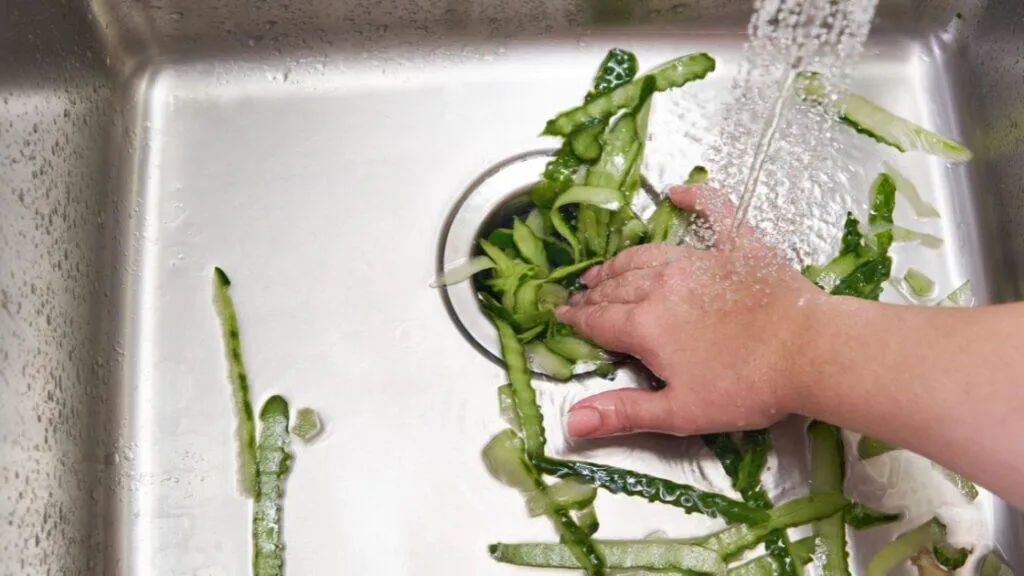
When a garbage disposal smells like rotten eggs, it usually comes from trapped food, grease, or bacteria in the disposal or drain. Smelly water may point to a water heater or water-quality issue.
Rotten egg odors can quickly spread beyond the sink and make the entire room feel unpleasant. Ignoring the smell may allow food buildup, bacteria, or drainage issues to become harder to address.
Why Does My Garbage Disposal Smell Like Rotten Eggs?
When a garbage disposal smells like rotten eggs, decomposing food is often the first suspect. Scraps can cling:
- Beneath the rubber splash guard
- Around the grinding chamber
- Inside the drain connection
Bacteria feed on organic matter and can release foul-smelling gases.
Grease can coat surfaces and trap debris. A slow drain may keep dirty water near the disposal.
Odor that appears mainly after the unit runs often points to nearby residue. A smell that returns soon after cleaning may signal buildup farther down the drain.
The goal is to remove the odor source, not simply cover it.
How Do You Get Rid of a Rotten Egg Smell in a Garbage Disposal?
Start with safe garbage disposal cleaning. Turn off the power at the switch and breaker before touching anything near the opening. Scrub both sides of the rubber splash guard with warm, soapy water because food film can hide underneath it.
Restore power after cleaning. Run cold water and operate the disposal to flush loosened debris. Ice cubes can help loosen residue.
Never place your hand inside the disposal.
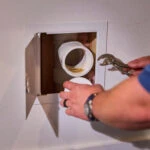
If cleaning does not fix disposal smells, a plumber can inspect the trap, drain line, dishwasher connection, and disposal for hidden buildup, a clog, or another drainage issue.
What Causes Garbage Disposal Odor to Keep Returning?
Recurring garbage disposal odor often means the source remains. Grease, starches, coffee grounds, and fibrous foods can collect inside plumbing. Food can also remain beneath the splash guard.
Run cold water before, during, and briefly after grinding. Feed scraps in small amounts. Keep grease, bones, coffee grounds, and fibrous peels out of the unit.
A partial clog can slow drainage and leave residue behind. Odor control works best when cleaning habits and drainage problems are addressed together.
Check the Drain, Not Just the Disposal
Some plumbing odor problems begin below the appliance. A coated drain line, dirty P-trap, or partial clog can send smells back through the sink even when the disposal is clean.
Watch for:
- Slow drainage
- Bubbling
- Gurgling
- Standing water
Those signs may indicate a restriction. Professional drain cleaning can reach buildup that routine sink care cannot remove.
Metro Flow Plumbing serves Dallas and North Texas with drain cleaning, drain repair, and garbage-disposal service. A professional inspection can identify the disposal or a deeper blockage as the source.
Use a Simple Test to Find the Real Source
A rotten-egg smell does not always come from the disposal. Water can carry a sulfur-like odor. Fill a clean glass with water, walk away from the sink, and smell it away from the drain.
Normal-smelling water makes the drain or disposal a more likely source. Odor in hot water but not cold water may involve the water heater. Odor in both may point toward a broader water-supply or water-quality concern.
Testing first can make kitchen odor removal more efficient. A quick source check can keep homeowners from treating the wrong plumbing component.
Clean the Disposal Without Creating a New Problem
A good cleaning routine should remove residue without damaging the appliance or pipes. Do the following:
- Cut power before cleaning reachable surfaces.
- Use warm water and dish soap on visible grime.
- Run cold water while the disposal operates.
- Use ice occasionally to help loosen residue.
- Keep grease, bones, coffee grounds, and fibrous peels out.
Harsh drain products may not solve the odor source. Professional service is a sensible next step when normal cleaning fails.
Metro Flow Plumbing also provides water-heater service, water filtration, clogged-drain service, and drain repair when an odor points beyond the disposal.
Prevent Rotten Egg Odors Before They Start
Prevention is easier than chasing a smell through the kitchen.
Run enough cold water to move waste through the drain. Feed scraps gradually. Rinse after use and clean beneath the splash guard during routine care.
Pay attention to slow flow, gurgling, leaks, or odors that return quickly. Those clues may signal deeper buildup. A clean disposal works best when the drain line can move waste freely.
Frequently Asked Questions
Can a Rotten Egg Smell Mean My Garbage Disposal Is Failing?
Not always. Odor often comes from food residue or bacteria rather than a failed motor. Replacement becomes more likely with:
- Repeated jams
- Leaks
- Unusual grinding sounds
- Weak performance
A plumber can separate cleaning problems from mechanical trouble and determine whether repair or replacement makes sense. An older disposal with recurring issues may need replacement.
Why Does the Smell Get Worse When I Run Hot Water?
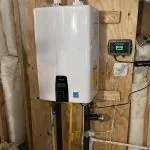
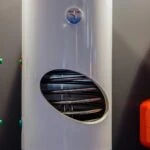
Heat can make odors easier to notice. A smell that appears only when hot water runs may involve the water heater instead of the disposal. Bacterial activity inside a tank can create a sulfur-like odor.
Compare hot and cold water at another faucet. A hot-water-only odor points toward the heater and may require service.
Can a Clogged Drain Make the Disposal Smell Even After Cleaning?
Yes. A partial clog can hold food, grease, and dirty water below the disposal. Surface cleaning may provide only short relief.
Slow drainage, bubbling, gurgling, or odor that returns quickly can support that possibility. Professional drain cleaning can remove deeper buildup and restore flow. Early service can keep a small restriction from becoming a blockage.
Garbage Disposal Smells Like Rotten Eggs? Metro Flow Plumbing Can Help
If garbage disposal smells like rotten eggs keep returning, contact Metro Flow Plumbing for a professional inspection. Since 1989, its Dallas-area team has provided reliable, affordable plumbing service, including drain cleaning, drain repair, water-heater work, disposal service, and water filtration.
Qualified plumbers provide fast response times, quality workmanship, and 24/7 emergency support. Stop masking the odor and solve its source. Contact Metro Flow Plumbing today to book a service call.