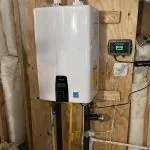

For most Texas homes, a hybrid heat-pump system is the stronger long-term pick for a water heater tank installation, provided there’s a garage or utility space to house it; while a traditional tank remains the smarter call when upfront cost or space is tight. Which one is right for your house comes down to layout, budget, and how the local climate treats your equipment day to day.
Water heaters account for about 12% of the average U.S. home’s energy use, and heat pump models use roughly a quarter of the energy of a standard tank, according to the EPA’s ENERGY STAR program.
That gap adds up fast in a state where summer electric bills already run high. Whether your old unit just failed or you’re planning ahead, this decision shapes your comfort and your bill for the next decade.
What Is a Traditional Storage Tank Water Heater?
A traditional storage tank actually heats water ahead of time and holds it in an insulated tank, ready the moment you turn on the tap. Electric models use heating elements inside the tank, while gas models rely on a burner underneath it, and neither type cares much what the room temperature happens to be.
That steadiness matters quite a bit in Texas, where a garage or utility closet can swing from a cold morning to a warm afternoon in just a few hours. The recovery rate performance on a traditional tank stays fairly consistent no matter what the space around it is doing, so a full house of showers in a row rarely runs the tank dry.
Metro-Flow Plumbing backs its traditional tank installations with a 6- to 12-year warranty, plus five years of complimentary flushes included at no extra cost. That kind of coverage tends to matter more than homeowners expect once a tank passes the ten-year mark.
A few practical differences separate electric and gas traditional tanks:
- Gas models typically need a dedicated vent for exhaust
- Electric models can sit in a fully interior closet
- Gas tanks usually recover faster after heavy use
- Electric tanks generally cost less to install upfront
What Is a Hybrid Heat-Pump Water Heater?
A hybrid heat pump water heater pulls heat from the air around it instead of creating all that heat with electric elements. The unit works kind of like an air conditioner running backward, moving warmth from the surrounding air into the water tank.
Most hybrid units still include backup electric elements, so hot water keeps flowing during a cold snap or a stretch of heavy use. That backup mode uses more electricity than the heat pump alone, so it typically switches on for shorter periods rather than running all day.
Texas homes tend to get strong results from this setup, since the state’s long warm season gives the heat pump plenty of warm air to work with for most of the year.
Which System Fits Dallas-Fort Worth’s Climate?
Dallas-Fort Worth sees a mix of long warm stretches and sharp winter cold snaps, and that combination shapes which system performs best. A hybrid unit still works well here, though it leans on its backup electric element more often than one installed in Houston or San Antonio.
The ambient garage temperature impact on a hybrid system is worth thinking through before installation day. A garage that drops well below 40°F during a North Texas freeze pushes the heat pump into backup mode more frequently, which cuts into the energy savings that make hybrid units appealing in the first place.
A traditional tank keeps producing hot water at a steady rate no matter how cold that garage gets, since it does not depend on the surrounding air. Homeowners with a tight interior closet usually find a traditional tank the more practical fit for a North Texas winter.
Is a Hybrid System Worth the Investment for Your Home?
A hybrid system usually costs more upfront than a traditional tank, so the decision often comes down to how long you plan to stay in the home. An energy efficiency comparison between the two systems typically favors the hybrid over time, since it uses less electricity to produce the same amount of hot water.
Homes with an electric-only setup and a garage or utility room with enough space and airflow tend to see the strongest results from a hybrid unit. Homes without that space, or households on a tighter budget, often do just as well with a traditional tank instead.
Water Heater Tank Installation and Permit Considerations
Texas cities handle water heater permits differently, so the rules for your installation depend on where you live. A licensed plumber should always confirm local requirements before work begins, since skipping this step can create problems down the road.
Frequently Asked Questions
How Long Do Traditional and Hybrid Water Heaters Typically Last?
A traditional tank usually lasts between 8 and 12 years with regular maintenance. A hybrid unit often lasts a bit longer, closer to 13 to 15 years, since the compressor takes on less strain than a standard heating element working around the clock.
Can a Hybrid Water Heater Go in a Dallas Attic or Closet?
A hybrid unit needs a fair amount of airflow to work well, so a small closet usually will not cut it. Most manufacturers recommend a space with several hundred cubic feet of air around the unit, which rules out many attics and tight closets in older Dallas homes.
Will a Hybrid Water Heater Raise My Electric Bill in Winter?
A hybrid unit uses more electricity during cold weather, since it leans on its backup element more often. Even with that increase, most homeowners still see lower electric costs overall compared to a standard electric tank.
Your Next Step Toward Reliable Hot Water
Traditional tanks and hybrid heat-pump systems both keep Texas homes running hot, but the right choice depends on your space, budget, and local climate. A proper site assessment, not a guess, is what separates a water heater tank installation that performs for a decade from one that underdelivers.
Metro-Flow Plumbing has served Dallas-Fort Worth homeowners since 1989, and our licensed technicians back every installation with a 6- to 12-year tank warranty plus five years of complimentary flushes; coverage most competitors don’t match. Call us today for a free quote, and get a system built around your actual home.